
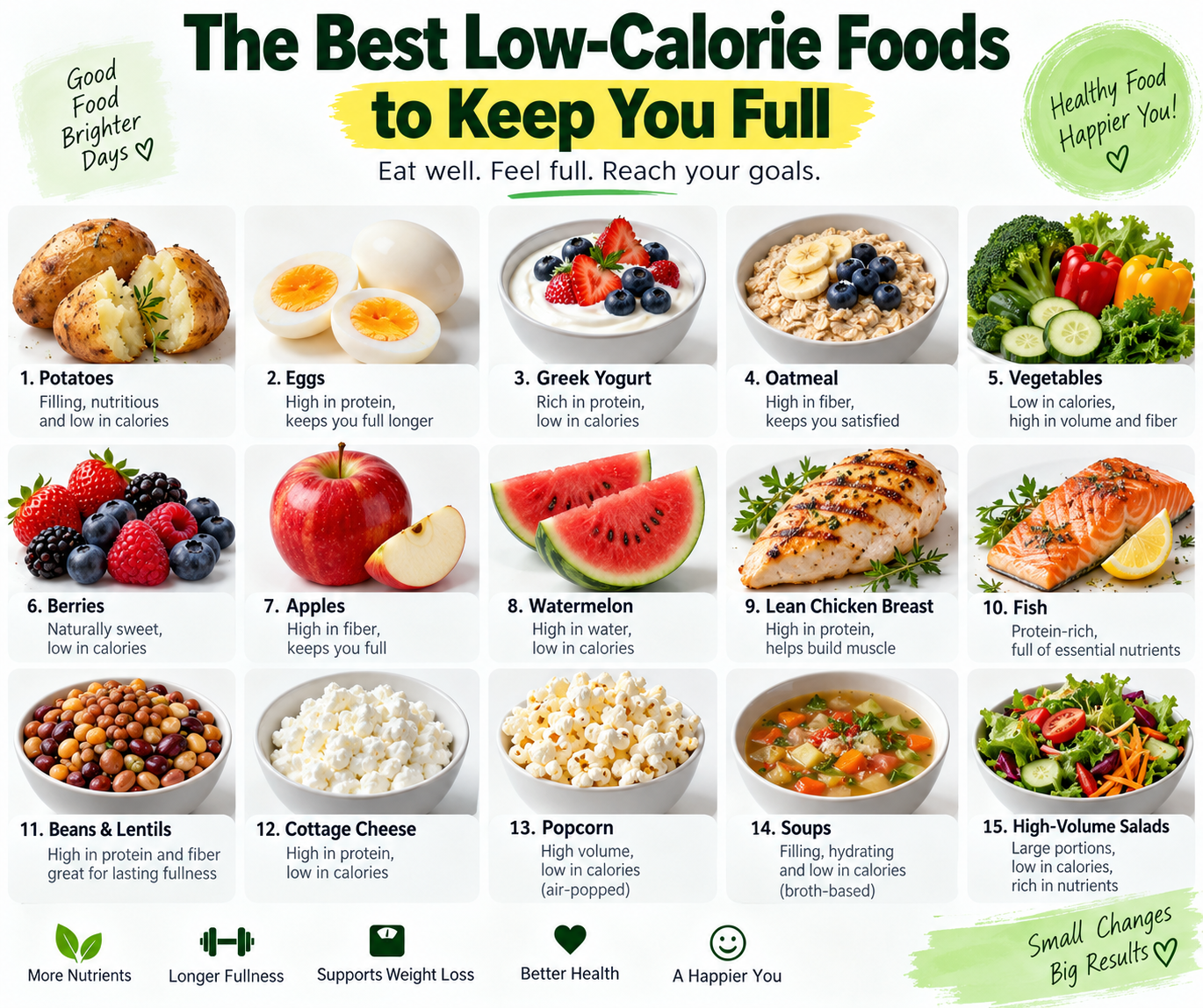
Losing weight does not have to mean feeling hungry all day. One of the most effective ways to manage your calorie intake is to choose foods that provide plenty of volume, protein, fiber, or water while keeping calories relatively low.
These foods can help you feel satisfied after meals, reduce unnecessary snacking, and make a healthy weight-loss plan easier to maintain.
In this guide, we’ll explore some of the best low-calorie foods to keep you full, how to combine them into balanced meals, and simple strategies for staying satisfied while eating fewer calories.
What Makes a Food Filling?
Not all low-calorie foods are equally satisfying. The foods that tend to keep you full usually contain one or more of the following:
- Protein: Helps support fullness and muscle maintenance.
- Fiber: Slows digestion and can help you stay satisfied longer.
- Water: Adds volume to food without adding many calories.
- Food volume: Larger portions of vegetables, fruits, and other high-volume foods can make meals feel more satisfying.
- Healthy fats: Small amounts can add flavor and satisfaction, although they are more calorie-dense than protein or vegetables.
A meal that combines several of these qualities can be much more satisfying than a meal based mainly on refined carbohydrates or highly processed foods.
15 Best Low-Calorie Foods to Keep You Full
1. Potatoes
Potatoes are often misunderstood when it comes to weight loss. Plain boiled or baked potatoes can be surprisingly filling while providing a relatively modest number of calories.
They also provide carbohydrates and important nutrients such as potassium and vitamin C.
For a lower-calorie option, try:
- Boiled potatoes
- Baked potatoes
- Air-fried potatoes with minimal oil
- Potatoes with vegetables and a lean protein source
The main difference comes from preparation. Large amounts of butter, cheese, cream, or oil can significantly increase the calorie content.
2. Eggs
Eggs are a convenient source of high-quality protein and can make breakfast or another meal more satisfying.
One or two eggs can be combined with vegetables, whole-grain toast, or fruit to create a balanced meal.
Try:
- Boiled eggs
- Scrambled eggs with vegetables
- Vegetable omelets
- Eggs with spinach and tomatoes
Eggs are also easy to prepare, making them useful for people with busy schedules.
3. Greek Yogurt
Plain Greek yogurt is rich in protein and can be a filling snack or breakfast option.
Choose unsweetened varieties when possible and add naturally sweet foods such as berries or a small amount of fruit.
For example:
Greek yogurt + berries + a small portion of oats = a simple, filling snack or breakfast.
Be careful with flavored yogurts because some varieties contain substantial amounts of added sugar.
4. Oatmeal
Oatmeal is a fiber-rich breakfast that can help you stay satisfied throughout the morning.
Instead of loading it with sugar, build a balanced bowl with:
- Oats
- Berries or sliced fruit
- Cinnamon
- Greek yogurt
- A small amount of nuts or seeds
Oats can also be prepared overnight, making them convenient for busy mornings.
5. Vegetables
Non-starchy vegetables are among the easiest foods to add to a weight-loss diet because many provide lots of food volume for relatively few calories.
Good choices include:
- Broccoli
- Cauliflower
- Cabbage
- Spinach
- Lettuce
- Cucumbers
- Tomatoes
- Zucchini
- Bell peppers
- Mushrooms
Try filling a substantial portion of your plate with vegetables before adding your protein and carbohydrate sources.
6. Berries
Berries provide natural sweetness while generally being lower in calories than many desserts and sugary snacks.
Good options include:
- Strawberries
- Blueberries
- Raspberries
- Blackberries
They can be eaten alone or added to oatmeal, Greek yogurt, or smoothies.
Because fruit contains water and fiber, whole fruit is generally more satisfying than fruit juice.
7. Apples
Apples are an easy, portable snack that combines water and fiber with natural sweetness.
Instead of reaching for cookies or candy when you want something sweet, try an apple.
For extra protein and staying power, pair it with a small amount of peanut butter or another protein-rich food.
8. Watermelon
Watermelon contains a high amount of water, which gives it a large volume relative to its calories.
It can be particularly refreshing during hot weather and can satisfy the desire for something sweet.
Enjoy it as a snack or alongside a meal.
As with other foods, portion size still matters, but watermelon can fit comfortably into a balanced calorie-controlled diet.
9. Lean Chicken Breast
Chicken breast is a high-protein food that can make meals more satisfying.
It works well with vegetables, potatoes, brown rice, or whole grains.
Simple preparation methods include:
- Grilling
- Baking
- Air frying
- Pan cooking with a small amount of oil
Avoid relying heavily on creamy sauces or deep-frying if your goal is to keep the meal lower in calories.
10. Fish
Many types of fish provide protein and can be an excellent addition to a healthy diet.
Examples include:
- Cod
- Haddock
- Tuna
- Tilapia
- Salmon
Some fish, such as salmon, contain more calories because they provide beneficial fats. That does not make them unhealthy; it simply means portion size and overall calorie intake matter.
11. Beans and Lentils
Beans and lentils are excellent sources of plant-based protein and fiber.
They can be particularly useful for people who want filling meals without relying entirely on meat.
Try adding them to:
- Soups
- Salads
- Stews
- Rice dishes
- Vegetable bowls
Because they contain both protein and fiber, they can contribute to a satisfying meal.
12. Cottage Cheese
Low-fat cottage cheese can be a protein-rich option for breakfast, snacks, or light meals.
You can combine it with:
- Berries
- Apples
- Tomatoes
- Cucumber
- Whole-grain toast
Choose a version that fits your nutritional needs and check the label for sodium if that is a concern for you.
13. Popcorn
Air-popped popcorn can be a high-volume snack when prepared without large amounts of butter or oil.
Because popcorn expands significantly during preparation, a relatively modest amount of kernels can produce a large bowl.
For a healthier snack, try seasoning it with:
- Cinnamon
- Paprika
- Black pepper
- Garlic powder
- A small amount of salt
14. Soups
Broth-based vegetable and protein soups can be surprisingly filling because they combine water, vegetables, and other nutrient-dense ingredients.
A simple soup might include:
- Chicken
- Lentils or beans
- Carrots
- Cabbage
- Tomatoes
- Spinach
- Onions
Cream-based soups can contain considerably more calories, so check the ingredients if you are trying to manage your calorie intake.
15. High-Volume Salads
A large salad can provide plenty of food volume without a huge calorie load when you choose the ingredients carefully.
Build your salad with:
Vegetables + lean protein + a moderate amount of healthy fat + a sensible dressing
For example:
- Lettuce
- Cucumber
- Tomato
- Bell pepper
- Grilled chicken
- A small amount of avocado
- Light dressing
Be careful with high-calorie toppings such as large amounts of cheese, creamy dressing, croutons, and nuts. These foods can be nutritious, but they can also increase the calories quickly.
How to Build a Filling Low-Calorie Meal
Instead of focusing on individual foods, think about how foods work together.
A simple formula is:
Protein + vegetables + high-fiber carbohydrate + small amount of healthy fat
For example:
Breakfast
Greek yogurt + berries + oats
Lunch
Grilled chicken + large salad + potatoes
Dinner
Fish + vegetables + brown rice
Snack
Apple + small amount of peanut butter
This approach gives you variety while helping you create meals that are both nutritious and satisfying.
The Role of Protein in Staying Full
Protein is particularly useful when you’re trying to lose weight because it can help increase feelings of fullness and support muscle maintenance during a calorie deficit.
Good protein sources include:
- Chicken
- Fish
- Eggs
- Greek yogurt
- Cottage cheese
- Beans
- Lentils
- Lean meat
- Tofu
Try to include a protein source in most of your main meals rather than eating most of your protein in only one meal.
The Role of Fiber
Fiber can also help make meals more satisfying and supports digestive health.
Foods that provide fiber include:
- Vegetables
- Fruits
- Beans
- Lentils
- Oats
- Whole grains
- Seeds
Increase fiber gradually and drink enough fluids, especially if your current diet is low in fiber.
Low-Calorie Does Not Mean Unlimited
One important weight-loss mistake is assuming that a food is “healthy” or “low-calorie” enough to eat without considering portions.
Foods such as nuts, peanut butter, avocado, olive oil, cheese, and dried fruit can be nutritious but relatively calorie-dense.
You do not need to avoid them. Instead, use reasonable portions and include them as part of a balanced diet.
Simple Tips to Stay Full While Eating Fewer Calories
1. Start meals with vegetables
Adding vegetables can increase the volume of your meal without adding a large number of calories.
2. Include protein at every main meal
Protein can make meals more satisfying and helps support muscle during weight loss.
3. Choose whole fruit instead of juice
Whole fruit provides fiber and usually takes longer to consume than juice.
4. Drink water regularly
Thirst can sometimes be confused with hunger. Staying hydrated is an important part of a healthy eating routine.
5. Eat slowly
Eating more slowly gives your body time to recognize that you are becoming full.
6. Plan your snacks
Keeping nutritious snacks available can make it easier to avoid impulsive choices when hunger appears.
7. Pay attention to calorie-dense extras
Dressings, sauces, cooking oils, sugary drinks, and large portions of toppings can add many calories without making a meal much more filling.
Sample Day of Filling, Lower-Calorie Meals
Here is one example of how these foods can fit into a balanced day:
Breakfast:
Oatmeal with Greek yogurt and berries
Lunch:
Grilled chicken, boiled potatoes, and a large vegetable salad
Snack:
An apple with a small portion of peanut butter
Dinner:
Baked fish, vegetables, and brown rice
Optional snack:
Plain Greek yogurt with berries
Your calorie needs will depend on factors such as age, body size, activity level, and your personal goals, so this example should be adjusted to fit your needs.
Common Mistakes to Avoid
Eating Too Little
Trying to lose weight by drastically cutting food intake can leave you hungry, tired, and less likely to maintain your plan.
A moderate, sustainable calorie deficit is generally easier to maintain than extreme restriction.
Ignoring Protein
A diet made mostly of low-calorie vegetables and fruit may leave you hungry if it does not contain enough protein.
Add protein to meals to improve their nutritional balance.
Drinking Too Many Calories
Soft drinks, sweetened coffee, energy drinks, and other sugary beverages can add significant calories without providing the same fullness as solid foods.
Choose water or other low-calorie beverages more often.
Overeating Healthy Foods
Healthy foods still contain calories. Eating large amounts of calorie-dense foods can make it difficult to maintain a calorie deficit.
Focus on both food quality and portion size.
Frequently Asked Questions
What is the best low-calorie food to keep you full?
There is no single best food for everyone. Foods rich in protein, fiber, and water—such as vegetables, potatoes, Greek yogurt, eggs, beans, lentils, and whole fruits—can be useful for staying satisfied while managing calories.
Can I eat low-calorie foods and still lose weight?
Yes, low-calorie foods can make it easier to maintain a calorie deficit. However, overall calorie intake, food quality, physical activity, sleep, and consistency all matter.
Are fruits good for weight loss?
Yes. Whole fruits can be part of a healthy weight-loss diet because they provide nutrients, water, and fiber. Portion size and your overall calorie intake still matter.
Is popcorn good for weight loss?
Air-popped popcorn can be a filling, relatively low-calorie snack. The calorie content can increase significantly when large amounts of butter, oil, sugar, or other toppings are added.
How can I stop feeling hungry while losing weight?
Focus on meals that contain protein, vegetables, fiber-rich carbohydrates, and appropriate portions of healthy fats. Eating slowly, staying hydrated, and getting enough sleep can also support appetite management.
Final Thoughts
The best low-calorie foods for weight loss are not necessarily the foods with the fewest calories. The most useful choices are foods that give you nutrients, volume, protein, fiber, and satisfaction while helping you manage your overall calorie intake.
Vegetables, fruits, potatoes, eggs, Greek yogurt, lean proteins, beans, lentils, oats, fish, and broth-based meals can all have a place in a balanced weight-loss diet.
Rather than trying to eat as little as possible, focus on building meals that keep you satisfied and are realistic enough to follow consistently.
A successful weight-loss diet should not leave you constantly hungry—it should help you eat well, stay satisfied, and make progress you can maintain.