
Starting a fitness routine can feel challenging if you think you need a gym membership, expensive equipment, or a lot of knowledge about exercises.
However, beginners can create a useful workout plan at home using just their body weight and a small space.
One of the main benefits of working out at home is its simplicity.
You can exercise whenever your schedule allows, avoid the hassle of traveling to a gym, and gradually build confidence as you strengthen your body. Most importantly, a good beginner workout should be realistic so you can stick with it over time.
This guide covers how to begin exercising at home, how to create a simple workout, which exercises are best for beginners, and how to increase the difficulty as your fitness improves.
Why Home Workouts are a Good Choice for Beginners.
Working out at home can help remove many of the barriers that make starting a fitness routine difficult.
You do not need to drive to a gym, wait for equipment, or worry about feeling out of place in a group setting.
Instead, you can exercise in a comfortable and familiar environment, learning each movement at your own pace.
Another benefit is flexibility.
A short workout can fit easily into a busy day, making it more practical than a long gym session. Even a 20-minute routine can be a great start if your main goal is to build consistency.
Home workouts can also be adjusted to match your current fitness level.
Beginners can use simpler variations of exercises and gradually move to more challenging movements as their strength and control increase.
What You Need Before Your First Workout.
You do not need a complicated setup to start working out at home.
A beginner can start with:
- Comfortable clothing
- A clear, safe space for exercise
- A stable surface with enough room to move
- A bottle of water
- A workout schedule that is realistic for your lifestyle.
A fitness mat can make floor exercises more comfortable, but it is not necessary.
Before starting, make sure the area is free from objects that may cause you to trip or lose balance.
How to Build a Beginner Home Workout
A basic workout can be broken down into three parts:
1.
Warm-Up:
Spend about 3 to 5 minutes preparing your body for movement.
You can start with simple movements like marching in place, arm circles, light squats, or knee raises.
The goal is to gradually increase your movement and prepare your joints and muscles, rather than jumping into intense exercise right away.
2.
Main Workout:
The main part of your workout should include different movement patterns, not just one muscle group.
A good beginner workout can include:
- A squat exercise for the lower body
- A pushing movement for the upper body
- A single-leg movement
- A core exercise
- A movement that raises your heart rate.
You can do the exercises one after another as a circuit, then rest and repeat.
3.
Cool Down
Finish with a few minutes of easier movements and gentle stretching.
A cool down helps you slow down your workout gradually and relax after exercising.
A Simple 20-Minute No-Equipment Workout
This routine is designed for beginners and uses only body weight exercises.
Start with a warm-up of 3 to 5 minutes.
Then complete the following exercises:
1.
Body weight Squats
Stand with your feet about shoulder-width apart.
Push your hips back and bend your knees while keeping your chest lifted.
Lower yourself as far as you can while staying in control.
Then push through your feet to return to the starting position.
Aim for around 30 to 45 seconds of controlled repetitions.
2.
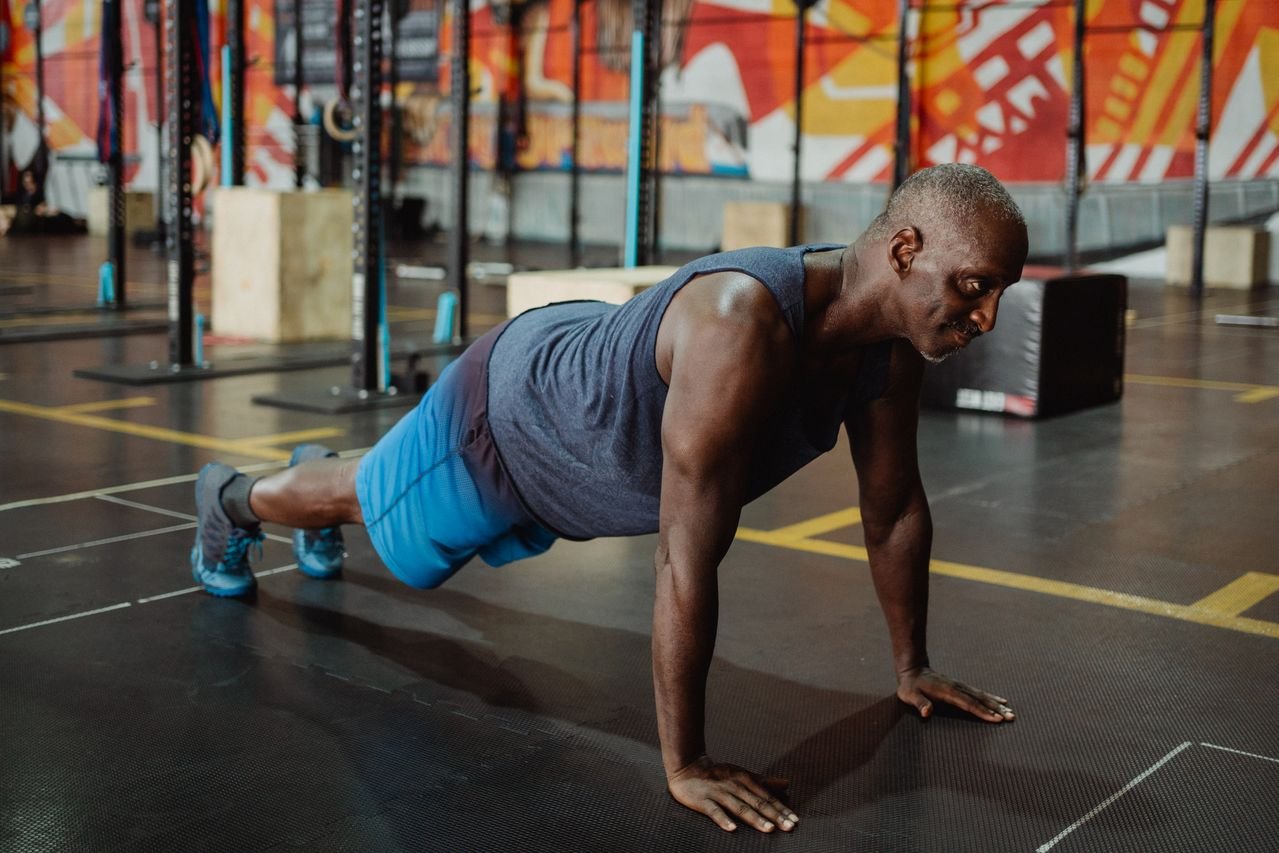
Incline Push-Ups:
Traditional push-ups can be tough to start If you are writing a formal text, avoid using preposition at the end of sentence..
A simpler option is to place your hands on a sturdy elevated surface, like a stable countertop.
Keep your body straight as you lower your chest toward the surface, then push yourself back up.
As you get stronger, you can move to lower surfaces and eventually try traditional floor push-ups.
3.
Reverse Lunges:
Stand upright and step one leg backward.
Bend both knees and slowly lower your body while maintaining control.
Then push through the front foot to return to a standing position.
Switch legs during the exercise to ensure both sides are worked evenly.
If you need assistance with balance, you can use a nearby stable object for support.
4.
Plank
Place your forearms on the floor and extend your legs behind you.
Keep your body in a straight line, and tighten your abdominal muscles to support your posture.
If holding a full plank is difficult, beginners can start by performing the movement on their knees.
Begin with a time that allows you to maintain proper form rather than trying to hold the position for an extended period.
5.
Glute Bridges
Lie on your back with your knees bent and feet flat on the floor.
Push through your feet to lift your hips until your body forms a straight line from your shoulders to your knees.
Hold briefly at the top, squeeze your glutes, and slowly lower your hips back down.
6.
Mountain Climbers:
Start in a high plank position with your hands shoulder-width apart.
Bring one knee toward your chest, then return it to the starting position, and switch sides.
Beginners can move slowly, focusing on maintaining control and a stable body position rather than speed.
How to Organize the Workout:
Complete each exercise for about 30 to 45 seconds, depending on your fitness level.
Take a short break between movements if needed.
After finishing all six exercises, take a longer rest and repeat the entire circuit again.
Your full session can be structured like this:
Warm-up: 3–5 minutes
Circuit: 10–15 minutesRest and second round: 5–10 minutes
Cooldown: 3–5 minutes
it is not necessary to make every workout extremely intense.
The main goal during the first few weeks is to develop a routine that you can stick with consistently.
How many days shouldDays Shoulddays should youShould Youshould you workYou Workyou work out?Work Out?work out?
For many new exercisers, starting with about three sessions per week is a practical and sustainable approach.
For example:
Monday: Full-body workout:
Tuesday: Rest or easy walking:
Wednesday: Full-body workout:
Thursday: Rest
Friday: Full-body workout
Weekend: Rest or light activity.
You can adjust your schedule based on your personal commitments, such as work, school, or family.
Recovery is an essential part of training.
Beginners should not feel the need to do intense workouts every day to see progress.
How to Make Home Workouts Harder Without Equipment
It is natural for a routine to become easier over time.
This is a positive sign as it shows your body is getting stronger and more adapted.
Instead of buying equipment immediately, you can increase the difficulty of your workouts in several ways.
Increase Repetitions:
Perform more repetitions while keeping good form and control.
Increase Time
Gradually increase the duration of each exercise from 30 seconds to 40 or 45 seconds.
Reduce Rest
Once you are confident with the routine, taking slightly shorter breaks between exercises can make the workout more challenging.
Use More Difficult Variations
For instance, you could progress from incline push-ups to knee push-ups and eventually to standard push-ups.
Improve Control:
Slowing down certain movements can increase the challenge and help you focus on proper technique.
The key idea is to make gradual improvements.
You do not need to make major changes every time you work out.
Common Mistakes Beginners Should Avoid
Doing Too Much Too Soon
A tough workout may feel good on the first day, but it can be hard to keep up with in the long run.
It is usually more realistic to start with manageable sessions rather than trying to do an hour-long workout right away.
Ignoring Technique:
The number of repetitions is not the only measure of a good workout.
Controlled movements with proper form are more important than rushing through exercises just to do more.
Training Every Day.
More exercise does not always mean better results.
When you are new to strength training, your body needs time to recover.
Expecting Fast Physical Changes.
Fitness improvements take time and consistent effort.
You may notice improvements in energy, coordination, endurance, or overall exercise performance before seeing major changes in appearance.
Focus on gradual progress rather than expecting dramatic results after only a few sessions.
Having No Consistent Schedule:
Occasional workouts are better than nothing, but having a regular schedule helps create a lasting habit.
Choose specific days and times that naturally fit into your routine.
How to Stay Consistent With Home Workouts
For many people who are just starting, the biggest challenge is not learning the exercises.
It is making sure they keep showing up for their workouts.
One helpful approach is to make starting your workout as simple as possible.
Prepare your workout clothes ahead of time, pick a consistent time each day, and keep your first few sessions short so they do not feel too hard or overwhelming.
You can also track small improvements like:
- The number of workouts you complete
- How long each session lasts
- The number of repetitions you do
- The type of push-up you use
- How long you can hold a plank
- How difficult you found the workout.
Noticing these small gains over time can help keep you motivated.
Frequently Asked Questions
Can beginners really get fit at home without any equipment?
Yes, you can.
Body weight exercises are a great way to build strength, improve muscle endurance, enhance movement skills, and increase overall fitness.
As you get more comfortable, you might decide to add some equipment, but it is not necessary to start.
How long should a beginner workout at home be?
A session that lasts between 15 and 30 minutes is usually enough for a beginner, especially if the main goal is to build a routine.
The best length of time depends on your fitness level, your schedule, and the type of workout you are doing.
Is it okay to exercise every day?
Yes, you can stay active every day.
But that does not mean every day should be a tough workout.
It is a good idea to alternate intense sessions with rest days or easier activities like walking or stretching.
What should I do if an exercise is too difficult?
Use a simpler version of the exercise.
For example, if push-ups are too hard, you can try doing them on an elevated surface instead of the floor.
You can also shorten your workout or take longer breaks between exercises.
How quickly will I see results?
Everyone’s progress is different.
You might notice improvements in your performance before you see changes in your body.
How fast you see results depends on how often you train, how well you recover, your nutrition, and other lifestyle factors.
Final Thoughts
You do not need a gym, complicated equipment, or a perfect workout plan to start exercising.
A little space, a few basic moves, and a realistic schedule can give you a solid start as a beginner.
Begin with something manageable, focus on doing the exercises right, make sure you recover well, and slowly increase the challenge as your body gets stronger.
The best home workout is not necessarily the hardest one.
It is the one you can do safely and regularly enough to make exercise a regular part of your life.