
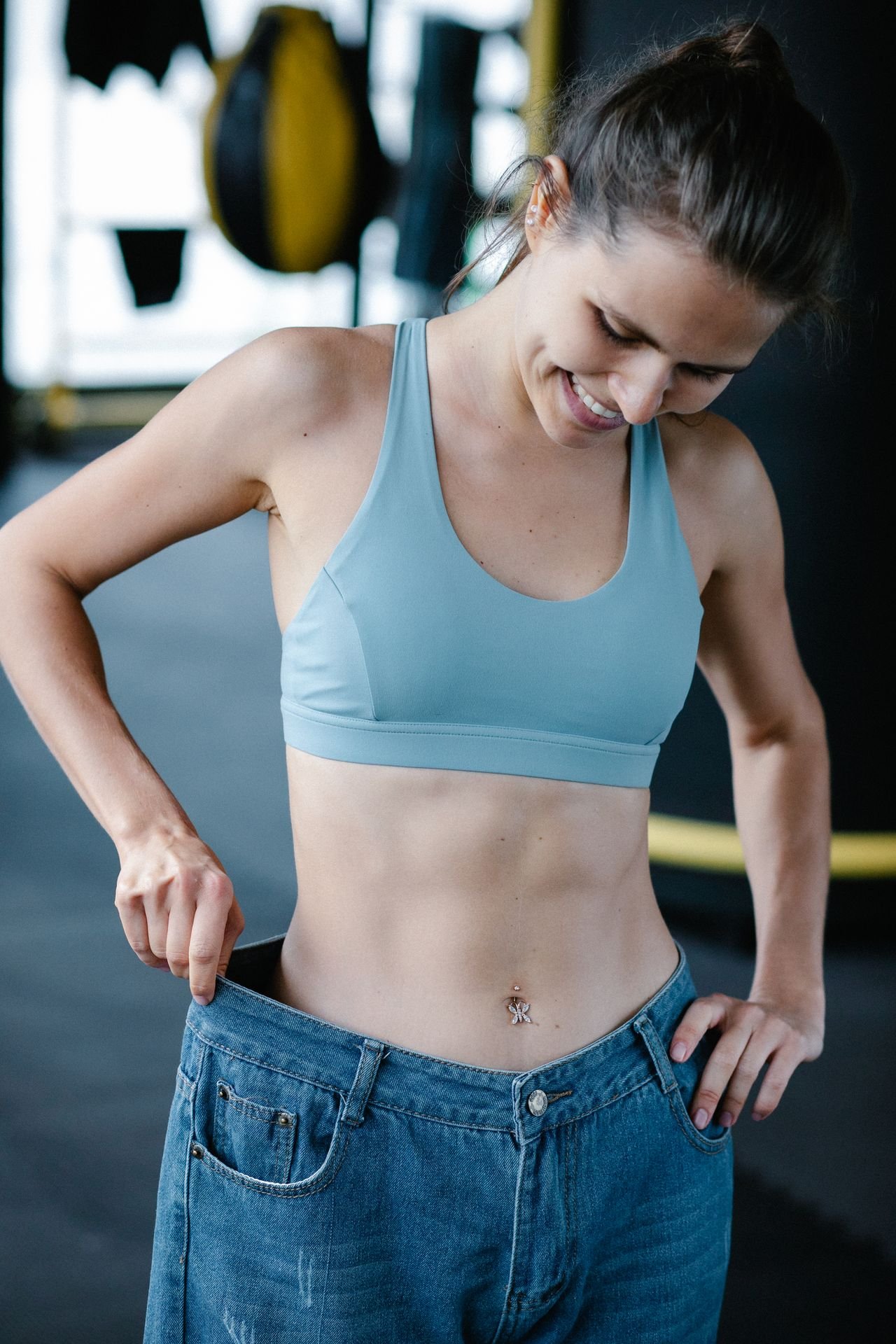
You do not need an expensive gym membership to get stronger. With the right exercises, a consistent routine, and a small amount of equipment—or even just your body weight—you can build strength from the comfort of your home.
Home strength training can help improve muscle strength, endurance, stability, and overall fitness. It can also be adapted to different fitness levels, making it suitable for beginners as well as more experienced exercisers.
In this guide, you’ll learn how to build an effective home strength-training routine using bodyweight exercises, resistance bands, and dumbbells, along with practical tips for progressing safely over time.
1. Bodyweight Exercises
Bodyweight exercises are an excellent starting point because they require little or no equipment. They use your own body weight as resistance and can be modified as your strength improves.
Push-Ups for Upper-Body Strength
Push-ups primarily train the chest, shoulders, and triceps while also requiring your core to work to stabilize your body.
How to perform a push-up:
- Start in a high-plank position with your hands slightly wider than your shoulders.
- Keep your body in a straight line from your head to your heels.
- Brace your core and bend your elbows to lower your chest toward the floor.
- Push through your hands to return to the starting position.
- Keep your movements controlled throughout each repetition.
If standard push-ups are too difficult, start with an easier variation such as incline or knee push-ups. As you become stronger, you can progress to more challenging variations.
Squats for Lower-Body Strength
Squats are a fundamental lower-body movement that primarily trains the quadriceps, glutes, and hamstrings while also challenging your core.
How to perform a bodyweight squat:
- Stand with your feet around shoulder-width apart.
- Keep your chest comfortably upright and brace your core.
- Push your hips back and bend your knees as you lower your body.
- Descend only as far as you can while maintaining good control and form.
- Drive through your feet to return to standing.
Beginners can use a chair for support or practice partial squats. More experienced exercisers can increase the challenge with jump squats, split squats, or single-leg variations.
Planks for Core Strength
Planks train the muscles responsible for core stability and can help improve your ability to maintain a strong body position during other exercises.
How to perform a forearm plank:
- Place your forearms on the floor with your elbows underneath or close to your shoulders.
- Extend your legs behind you and support yourself on your toes.
- Keep your body in a relatively straight line.
- Brace your core and avoid letting your hips sag or rise excessively.
- Hold the position while maintaining controlled breathing.
Start with a manageable duration and gradually increase the time as your core endurance improves.
2. Resistance Band Exercises
Resistance bands are inexpensive, portable, and useful for adding resistance to home workouts. They can be used to train both upper- and lower-body muscles without requiring large pieces of equipment.
Resistance Band Bicep Curls
Bicep curls are a simple way to directly train the muscles at the front of your upper arms.
How to perform them:
- Stand on the middle of the resistance band.
- Hold one end in each hand with your palms facing forward.
- Keep your elbows close to your sides.
- Curl your hands toward your shoulders.
- Lower the band slowly and under control.
Avoid swinging your body to move the resistance. Controlled repetitions are more useful than simply completing as many repetitions as possible.
Resistance Band Chest Press
A resistance-band chest press can train the chest while also involving the shoulders and triceps.
If using a door anchor, make sure it is specifically designed for resistance bands and is securely attached before exercising.
How to perform it:
- Secure the band behind you at approximately chest height.
- Hold the handles or ends of the band.
- Start with your hands near chest level.
- Press your hands forward until your arms are comfortably extended.
- Slowly return to the starting position.
Resistance Band Leg Extensions
Resistance-band leg extensions can target the quadriceps.
How to perform them:
- Sit on a sturdy chair.
- Secure the band appropriately around your ankles and the chair.
- Keep your upper body stable.
- Extend one leg forward against the resistance.
- Slowly return to the starting position.
- Repeat on the other leg.
Use controlled movements and an appropriate resistance level rather than forcing the exercise.
3. Dumbbell Exercises
Dumbbells provide another way to progressively increase resistance at home. They allow you to train a wide range of movements and adjust the difficulty according to your fitness level.
Dumbbell Rows for Back Strength
Dumbbell rows train several muscles of the upper and middle back while also requiring your core to stabilize your body.
How to perform a dumbbell row:
- Hold a dumbbell in each hand.
- Hinge forward at your hips while keeping your back in a comfortable, neutral position.
- Allow the dumbbells to hang beneath your shoulders.
- Pull the weights toward your torso.
- Lower them slowly and repeat.
Focus on moving the weights with your back and arms rather than using momentum.
A practical starting point is 3 sets of 8–12 repetitions, using a weight that allows you to maintain good technique.
Dumbbell Shoulder Press
The shoulder press primarily trains the shoulders and triceps while also requiring your core to stabilize your body.
How to perform it:
- Hold a dumbbell in each hand at approximately shoulder height.
- Brace your core and maintain a stable posture.
- Press the dumbbells overhead.
- Stop before your form breaks down.
- Lower the weights slowly back to shoulder level.
You can perform the exercise seated or standing.
A practical starting point is 3 sets of 8–12 repetitions, adjusting the weight to your fitness level.
Dumbbell Deadlifts
Dumbbell deadlifts are a compound movement that trains the glutes and hamstrings while also challenging your back and core.
How to perform a dumbbell deadlift:
- Stand with your feet around hip-width apart.
- Hold the dumbbells in front of your thighs.
- Brace your core and push your hips backward.
- Lower the dumbbells along your legs while keeping your back controlled.
- Stop when you feel an appropriate stretch in your hamstrings.
- Drive through your feet and extend your hips to return to standing.
Start with a manageable weight and prioritize technique before increasing resistance.
4. How to Build a Home Strength Routine
You do not need to perform every exercise in one session. A simple full-body routine can include one movement for your legs, one pushing exercise, one pulling exercise, and one core exercise.
For example:
| Exercise | Sets | Repetitions |
|---|---|---|
| Bodyweight Squats | 3 | 8–15 |
| Push-Ups | 3 | 6–15 |
| Dumbbell Rows | 3 | 8–12 |
| Dumbbell Deadlifts | 3 | 8–12 |
| Plank | 3 | 20–45 sec |
Adjust the repetitions, resistance, and exercise variations to match your current fitness level.
5. How to Progress at Home
One of the most important parts of strength training is progressive overload—gradually making your workouts more challenging as your body adapts.
You can progress by:
- Increasing the weight
- Adding repetitions
- Adding a set
- Using a more difficult exercise variation
- Increasing range of motion when appropriate
- Improving your technique and control
- Reducing unnecessary rest between certain exercises
Progress does not need to happen every workout. Give your body time to adapt and recover.
6. Beginner Tips for Safe Home Workouts
If you are new to strength training, start gradually rather than trying to do too much too soon.
Warm Up First
Spend a few minutes preparing your body with light movement and dynamic exercises before harder training.
Focus on Form
Good technique should come before heavier weights or more repetitions. If you cannot maintain control, reduce the difficulty.
Use Safe Equipment
Make sure dumbbells, resistance bands, chairs, benches, and anchors are stable and appropriate for the exercise.
Give Your Muscles Time to Recover
Strength training creates a training stimulus, but recovery is also important. Allow muscle groups enough time to recover before training them hard again.
Stop if You Experience Sharp Pain
Normal muscular effort and fatigue are different from sharp or severe pain. If an exercise causes concerning pain, stop and seek appropriate professional advice.
7. Common Home Strength-Training Mistakes
Doing Too Much Too Soon
Increasing training volume or resistance too quickly can make recovery difficult. Build your routine gradually.
Ignoring Lower-Body Training
A balanced routine should train both the upper and lower body rather than focusing exclusively on arms or chest.
Using Momentum
Swinging weights can reduce control and make exercises less effective. Use a resistance level that allows controlled repetitions.
Never Increasing the Challenge
If every workout remains exactly the same, your body may eventually have less reason to adapt. Gradually increase the difficulty as you become stronger.
Skipping Recovery
More exercise is not always better. Rest and recovery are important parts of a sustainable training plan.
Frequently Asked Questions
Can I build strength at home without equipment?
Yes. Exercises such as push-ups, squats, lunges, and planks can provide effective resistance training without traditional gym equipment.
Are dumbbells necessary for home strength training?
No. Dumbbells are useful, but they are not essential. Bodyweight exercises and resistance bands can also provide challenging workouts.
How often should I do strength training at home?
Your ideal schedule depends on your fitness level, goals, and recovery. A beginner can start with a manageable number of sessions each week and gradually increase training as they adapt.
Can home workouts build muscle?
Yes. Muscle growth can occur when muscles are challenged with sufficient resistance and training progresses over time. Nutrition and recovery also play important roles.
How long should a home strength workout last?
There is no single perfect workout length. A focused session can be effective even when you have limited time. The quality and consistency of your training matter more than simply spending a long time exercising.
What is the best home exercise for strength?
There is no single best exercise. A well-rounded routine should include movements that train major muscle groups, such as squats, push-ups, rows, deadlift variations, and core exercises.
Final Thoughts
Home strength training can be an effective and convenient way to become stronger without relying on a traditional gym.
Bodyweight movements provide a simple starting point, resistance bands add adjustable resistance, and dumbbells allow you to progressively challenge your muscles as your strength improves.
The key is not having the biggest collection of equipment. It is following a structured routine, using good technique, gradually increasing the challenge, and giving your body enough time to recover.
Start with what you have, focus on consistent progress, and build your routine one step at a time. You do not need a gym to get stronger—you need a plan you can stick to.